

TECHNOLOGIES
We leverage advanced software architecture, data management, and computational reservoir technologies to build an innovative ecosystem for subsurface reservoir management. A unified database streamlines data access and sharing across all applications, enabling efficient model development and analysis with reduced data input—addressing the inefficiencies of legacy desktop software.
Our robust platforms are powered by scalable cloud storage and computing resources, enabling clients to harness advanced computational technologies to enhance decision-making and drive significant value for their organizations.
Reservoir Simulation
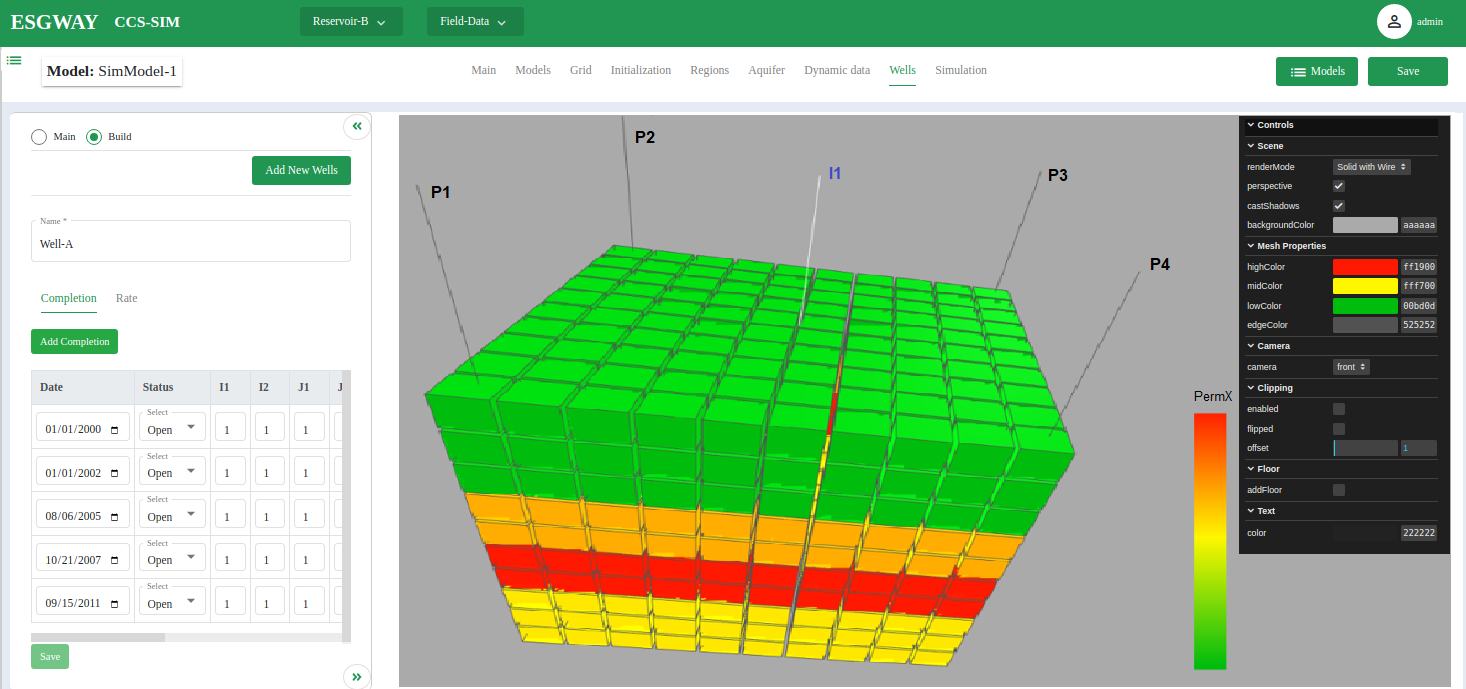
Reservoir Simulation is commonly used to predict the flow of reservoir fluids under various production scenarios, allowing engineers to optimize the extraction and storage processes and make informed decisions about reservoir management. EnergiCompute platforms streamline the creation and running of simulation models using cloud computing resources while simplifying the simulation workflows by providing scalable, on-demand computational power and data storage.
How reservoir simulation is used in EnergiCompute platforms?
Enhanced Decision-Making
The platforms offer advanced reservoir modeling and production analytics tools that help companies simulate reservoir dynamics and analyze vast amounts of data more effectively. This includes predictive analytics, machine learning, and AI-driven insights, which can lead to better decision-making.
Recovery Enhancement
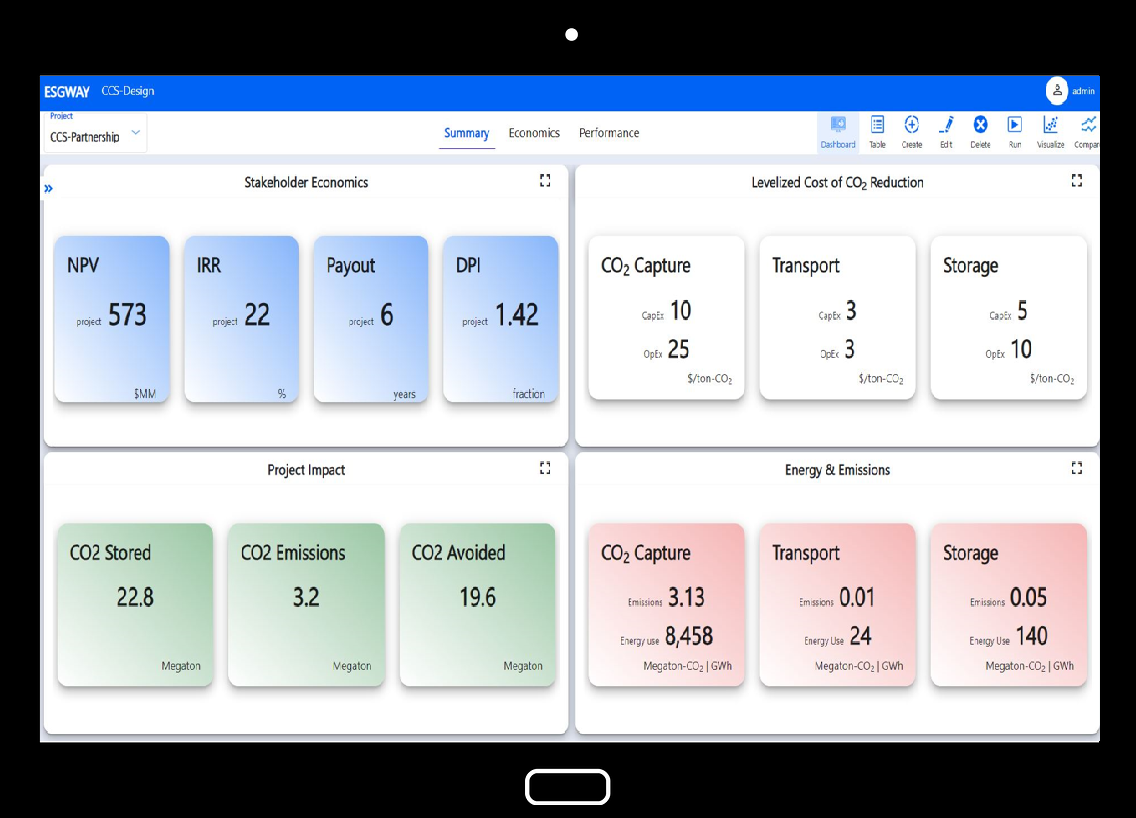
The platform helps in optimizing the use of resources by providing insights into equipment performance, operational efficiency, and resource allocation. This can lead to cost savings and improved productivity.
Machine Learning
Machine learning (ML) is increasingly being adopted in the oil and gas industry, particularly for production forecasting and Enhanced Oil Recovery (EOR) optimization. ML techniques leverage vast amounts of historical data to identify patterns, predict future outcomes, and optimize processes that would be complex, time-consuming, or impractical to model using traditional methods.
A ML Workflow for Oil and Gas Forecasting involves the following steps:
- Data Preprocessing: Clean, transform, and engineer features from the data. Split into training, validation, and test sets.
- Model Development: Choose and train the appropriate ML model (e.g., regression, neural networks). Optimize hyperparameters.
- Evaluation: Validate and test the model using appropriate metrics (e.g., RMSE). Ensure the model is interpretable.
- Deployment: Implement the model in a production environment, enabling real-time or batch forecasting.
- Monitoring: Continuously monitor and retrain the model to maintain accuracy. Incorporate user feedback for improvements.
- Documentation: Record the workflow and share insights with the team for transparency and ongoing optimization.
How we employ machine learning in our products?
EOR Pilot Simulation
ePROJECT leverages reservoir simulation to evaluate and optimize EOR techniques on a smaller section of a reservoir before full-scale implementation. By creating a detailed model of the pilot area and simulating various EOR methods, such as thermal, chemical, or gas injection, engineers can predict the potential success, optimize key parameters, and assess risks
Production Forecasting
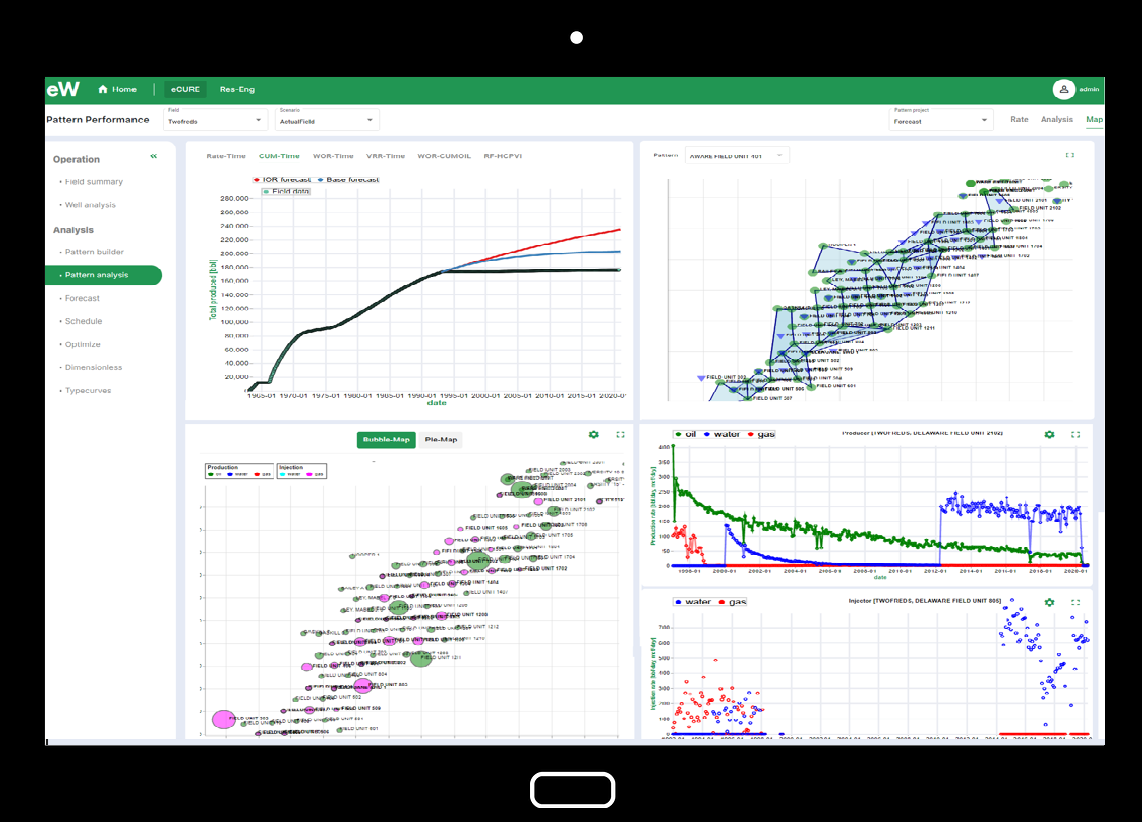
tOPTIMA streamlines geomodeling and history matching workflow to accurately reflect past production data, ensuring its reliability. Various production scenarios are then simulated to predict future production rates, helping in planning field development, optimizing recovery strategies, and making informed decisions about resource management.
CO2 Storage
cNAV leverages numerical simulation for optimizing CO₂ storage development by providing a detailed model of the subsurface, which helps predict how CO₂ will behave when injected into a geological formation. By integrating data on the reservoir's geological structure, rock properties, and fluid dynamics, simulations can forecast CO₂ plume movement, pressure changes, and potential interactions with existing fluids. This allows engineers to optimize injection strategies, monitor storage security, and assess the long-term stability of the CO₂ storage site, ensuring safe and efficient storage while minimizing risks like leakage or environmental impact.
CRM Reservoir Modeling
Capacitance-Resistance Modeling (CRM) is a simplified, physics-based method to estimate and analyze the behavior of reservoirs, particularly in waterflooding operations. It provides a way to model and predict the flow of fluids (like oil, water, or gas) in a reservoir without requiring detailed geological data or complex simulations.
How do we use CRM?
PRODUCTION FORECASTING
tOptima offers a user-friendly workflow for customizing well and flood pattern models. Engineers benefit from fast auto-forecasting and detailed data visualization, while optimizing water, CO₂, and gas flood operations with predictive models
- Dimensionless Analysis (DA)
- Capacitance-Resistance Modeling (CRM)
- Decline-Curve Analysis (DCA)
- Reservoir Simulation
- Machine Learning
Flood Characterization
everaging CRM and pattern-based analysis allows for the characterization of pattern efficiency and deduction of inter-well connectivity. Automated statistical analysis of pattern performances enhances understanding of ongoing flood operations, and the injector-producer connectivity revealed from CRM modeling highlights contributing sand bodies and bypassed areas.
- Comprehensive data integration
- No-code machine learning framework
- Reservoir simulation platform
- Optimization workflow
FLOOD OPTIMIZATION
CRM and DA offer a verifiable methodology to establish a validated model for predicting flood performance across diverse injection scenarios. ARPS, through the utilization of the forecasting model and optimization algorithms, empowers engineers to optimize the redistribution of injection fluid, aiming for maximum recovery while minimizing fluid recycling.
- Lookback performance evaluator
- No-code machine learning framework
- Reservoir simulation platform
- IOR candidate selector